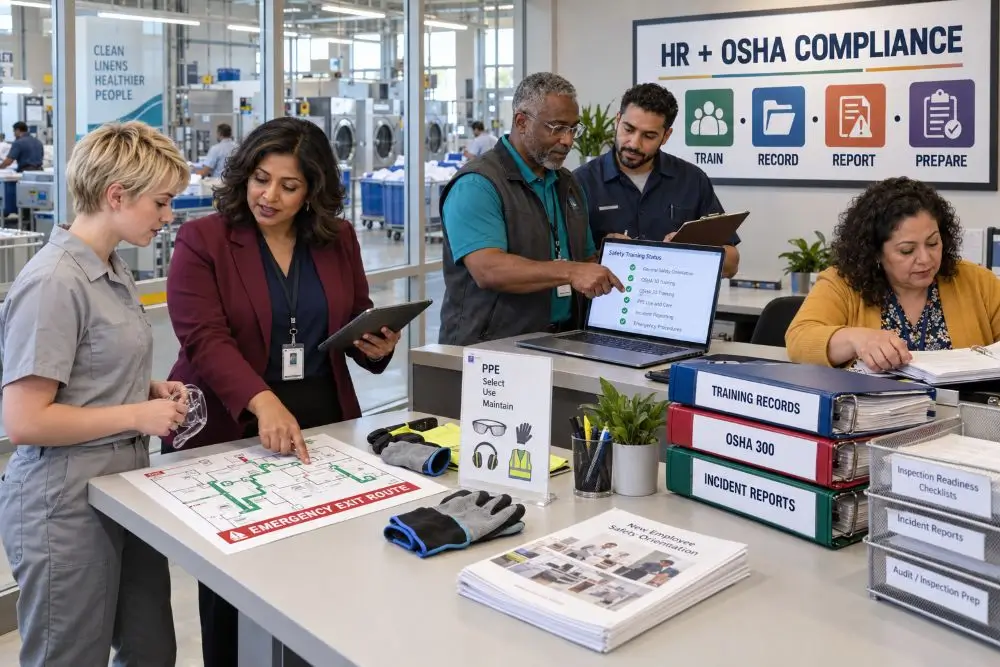
Workplace safety ensures employees’ protection while maintaining a productive work environment. OSHA establishes workplace safety and health requirements that employers must follow to address applicable hazards and protect workers. For HR departments, understanding these requirements is essential because employee onboarding, safety training, recordkeeping, and workplace policies often involve HR coordination.
HR professionals can support OSHA compliance by maintaining accurate training records, communicating safety procedures, and working closely with managers and safety teams to address workplace concerns. Although compliance is a shared responsibility across the organization, HR can help ensure employees understand their responsibilities, receive appropriate training, and know how to report hazards or incidents.
Understanding OSHA and Its Role in Workplace Safety
The Occupational Safety and Health Administration (OSHA) is a U.S. Department of Labor agency that ensures safe and healthful working conditions. OSHA develops and enforces workplace safety and health standards, conducts inspections, and provides resources to help employers understand their responsibilities. These requirements are designed to reduce workplace hazards, prevent injuries and illnesses, and protect employees on the job.
OSHA requirements can vary depending on the industry, the hazards present, and whether a workplace falls under federal OSHA or an OSHA-approved state plan. HR professionals should understand which rules apply to their organization and work with safety personnel to ensure workplace policies and procedures address the relevant requirements.
What Are HR’s Responsibilities in OSHA Compliance?
HR helps coordinate the policies, communication, and documentation that support workplace safety. Although OSHA compliance is a shared responsibility, HR often works with supervisors, managers, and safety professionals to ensure employees understand workplace procedures and receive the training required for their roles.
Coordinating safety training and onboarding: Ensure employees receive required safety instruction when hired, assigned new tasks, or exposed to new hazards.
Maintaining records: Keep accurate training documentation and help maintain injury and illness records when required by OSHA.
Communicating safety policies: Explain workplace safety rules, emergency procedures, and how employees can report hazards or injuries.
Supporting incident reporting and investigations: Help document incidents, coordinate communication, and work with relevant personnel to identify contributing factors.
Working with supervisors and safety professionals: Follow up on reported hazards, corrective actions, and recurring safety concerns to help prevent future incidents.
Employee Safety Training and OSHA 10-Hour and 30-Hour Courses
Employee safety training should reflect employees’ job duties, workplace hazards, and applicable OSHA requirements. HR can help coordinate training during onboarding and when employees take on new responsibilities or encounter new hazards. However, general safety courses may not cover every risk specific to a job, so employers may need to provide additional instruction tailored to their workplace and tasks.
OSHA 10-Hour Training is an introductory course offered through OSHA’s Outreach Training Program. It covers foundational workplace safety and health topics and is designed primarily for entry-level workers. The course helps participants recognize common hazards and understand basic ways to work more safely. The available content depends on whether the course focuses on construction or general industry.
OSHA 30-Hour Training provides more in-depth instruction for workers who have greater safety responsibilities, including supervisors, managers, and other personnel who oversee workplace activities. It covers a broader range of safety and health topics than the 10-hour course, helping participants build a stronger understanding of workplace hazards and prevention practices.
Both courses are part of the OSHA Outreach Training Program. They provide course completion cards, not professional certifications, and completing either course does not automatically satisfy every OSHA training requirement or establish that an employer is fully compliant. HR can help track course completion, maintain training records, and work with supervisors to identify when employees need additional job-specific instruction or training required by applicable standards.
HR should also understand which reporting and recordkeeping requirements apply to the organization. For example, certain employers must maintain OSHA Forms 300, 300A, and 301, while specific severe work-related injuries and fatalities must be reported to OSHA within required timeframes.
Maintaining OSHA Records and Documentation
Accurate records help employers track workplace injuries and illnesses, document employee safety training, and show how safety procedures are implemented. HR may help maintain training records, written safety policies, incident reports, and documentation of workplace inspections and corrective actions. Keeping these records organized makes it easier to review safety concerns, identify recurring hazards, and provide relevant documentation during an OSHA inspection.
Employers should retain records for the periods required by applicable rules and limit access to confidential employee information, including sensitive medical details. OSHA recordkeeping requirements vary by employer size, industry, and circumstances. Where applicable, OSHA Forms 300, 300A, and 301 are used to record work-related injuries and illnesses, summarize cases, and document individual incidents. Certain employers are exempt from some routine recordkeeping requirements, but reporting serious incidents to OSHA may still be required. HR should work with safety personnel to confirm which records must be maintained, how long they must be kept, and when incidents must be recorded or reported.
Reporting Workplace Injuries, Illnesses, and Hazards
HR can help ensure employees understand how to report workplace injuries, illnesses, unsafe conditions, and near misses through established internal procedures. Employees should know whom to contact, what information to provide, and how to raise safety concerns promptly. Clear reporting procedures help organizations respond quickly and identify hazards before they cause further harm.
After an incident, HR should coordinate with supervisors and safety personnel to document relevant details, support the investigation, and help track corrective actions. Employers must also determine whether an incident triggers a direct OSHA reporting obligation. When applicable, a work-related fatality must generally be reported to OSHA within eight hours, while an in-patient hospitalization, amputation, or loss of an eye must generally be reported within 24 hours. These deadlines apply to reportable incidents under OSHA’s rules, subject to specific exceptions.
Preparing for OSHA Inspections
HR can help prepare for an OSHA inspection by organizing relevant records, including employee training documentation, injury and illness logs where required, written safety procedures, and records of corrective actions. Keeping these documents accurate and accessible makes it easier to respond to requests and demonstrate how the organization manages workplace safety.
During an inspection, HR should coordinate with management, safety professionals, and designated employer representatives to help provide requested documentation and direct questions to the appropriate personnel. Employers should respond promptly and accurately, avoid altering or backdating records, and document any findings or requested corrective actions. After the inspection, HR can help track deadlines, maintain records of corrective measures, and follow up with the relevant teams to address identified safety concerns.
Conclusion
OSHA compliance is a shared responsibility, and HR plays an important role in supporting workplace safety through training coordination, accurate recordkeeping, clear communication, and incident reporting. By working closely with supervisors and safety professionals, HR can help ensure employees understand safety procedures, workplace hazards are addressed, and required documentation is maintained.
HR teams should regularly review applicable OSHA requirements, keep training records up to date, and follow established procedures for reporting incidents and responding to inspections. OSHA 10-Hour and 30-Hour Outreach Training courses can support safety awareness, but employers must also provide any additional training required for specific job duties and workplace hazards. A consistent approach helps organizations manage their responsibilities and maintain a safer working environment.