Since its establishment in 1970, the Occupational Safety and Health Administration (OSHA) has been a cornerstone of workplace safety in the United States. The agency’s impact is undeniable. Worker deaths have decreased by 60%, while occupational injury and illness rates have fallen by 40%, even as the U.S. workforce has more than doubled (OSHA Data, 2024).
With more than 21 million workers across 6.9 million workplaces, OSHA’s mission remains clear: to ensure safe and healthy working conditions for every employee. Through education, enforcement, and outreach, OSHA continues to raise safety standards and empower industries, especially general industry sectors, which include manufacturing, warehousing, healthcare, and retail.
OSHA General Industry Online Courses
To help businesses and employees maintain adherence, OSHA Online Center offers two specialized online training programs: the 10-Hour and 30-Hour General Industry Courses.
OSHA 10-Hour General Industry Course
This foundational program is ideal for entry-level workers who need to understand core OSHA standards. It teaches hazard recognition, safety awareness, and best practices to minimize risks in the workplace.
Upon completion, participants receive an official OSHA General Industry DOL card and a certificate, demonstrating their commitment to safety adherence.
OSHA 30-Hour General Industry Course
Designed for supervisors, safety managers, and senior workers, this course provides in-depth knowledge of workplace hazards and OSHA regulations. It covers:
Fire prevention and emergency response
Hazard communication and chemical safety
PPE and ergonomics awareness
Electrical and machine safety
The interactive online format allows learners to progress at their own pace while gaining the tools to anticipate, identify, and control potential hazards.
OSHA Safety Standards in General Industry Regulations
1. Hazard Communication – 29 CFR 1910.1200
The Hazard Communication Standard ensures workers understand the dangers of chemicals in their workplace. Employers must maintain Safety Data Sheets (SDS), properly label containers, and provide hazard training.
Training Benefit: OSHA’s online course explains how to handle, store, and communicate chemical hazards safely, reducing the risk of workplace accidents and toxic exposure.
2. Emergency Action Plans – 29 CFR 1910.38
This regulation requires every employer to develop a clear emergency action plan (EAP). The plan should include evacuation routes, reporting methods, and emergency contact procedures.
Training Benefit: OSHA training teaches how to design, implement, and communicate these plans to ensure quick, safe responses during fires, natural disasters, or chemical spills.
3. Fire Safety Standard – 29 CFR 1910.39
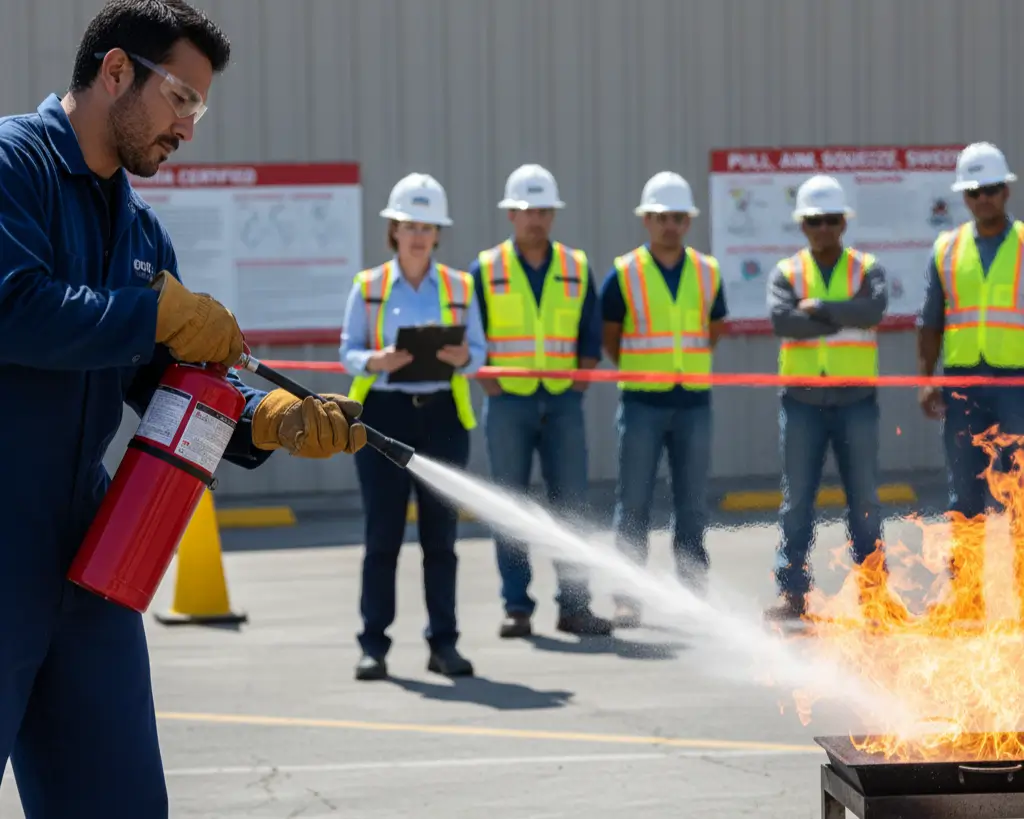
This standard focuses on fire prevention plans and proper handling of firefighting equipment such as extinguishers and respirators.
Training Benefit: Employees learn how to identify fire hazards, use extinguishers correctly, and follow prevention protocols to reduce workplace fire risks.
4. Exit Routes During Emergencies – 29 CFR 1910.34–37
OSHA mandates that workplaces maintain clear, accessible exit routes to ensure fast evacuation in an emergency.
Training Benefit: The OSHA General Industry course explains how to design and maintain safe exit routes, ensuring adherence and saving lives during emergencies.
5. Machine Guarding Standard – 29 CFR 1910.212
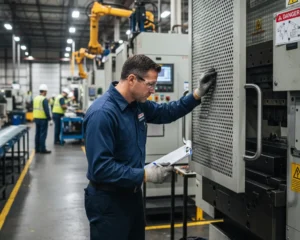
Machine guarding prevents workers from contacting hazardous machine parts. The standard requires physical guards, shields, or sensors to prevent injuries.
Training Benefit: Participants learn how to install, maintain, and inspect machine guards properly, reducing the risk of amputations and crushing injuries.
6. Medical and First Aid – 29 CFR 1910.151
This standard requires employers to provide immediate medical attention and first aid in case of workplace injury or illness.
Training Benefit: OSHA’s online programs teach proper PPE use, first aid protocols, and emergency response readiness to ensure timely care and adherence.
Benefits of OSHA Online Training
1. Comprehensive Safety Awareness
Online OSHA courses ensure workers never overlook key safety protocols. They provide a structured understanding of hazard identification, risk assessment, and preventive measures critical for maintaining a secure workplace.
2. Cost and Time Efficiency
Online courses minimize travel and scheduling conflicts, allowing employees to complete training anytime, anywhere. Most modules take only a few hours, offering maximum learning with minimal disruption.
According to OSHA, safety training can reduce workplace injuries by up to 35%, resulting in lower compensation and downtime costs (OSHA.gov, 2024).
3. Encourages Safety Committees
Training inspires management to form safety committees that regularly audit procedures, investigate near-misses, and promote a culture of reporting hazards before they escalate.
4. Career Advancement
Employees who complete OSHA General Industry courses often gain career growth opportunities. OSHA certification signals professionalism and dedication, which employers value in safety-conscious environments.
5. Networking and Continuous Learning
Participants connect with other professionals across industries, sharing insights and best practices in workplace safety and adherence.
OSHA in Action: Impact by the Numbers
In 2022, OSHA conducted 31,820 workplace inspections, over 50% of which resulted from employee reports of injuries or unsafe conditions (Department of Labor Report, 2023). Another 44% focused on adherence verification and hazard prevention efforts.
These figures underscore OSHA’s ongoing role in saving lives and improving workplace standards with education and training at the heart of its mission.
Conclusion
Workplace safety is not optional; it’s essential. OSHA’s ongoing commitment to training and inspection has transformed the American workplace, reducing accidents and promoting a culture of accountability.
By enrolling in OSHA General Industry Online Courses, employers and employees alike can ensure adherence, minimize risks, and contribute to safer workplaces nationwide.
Take the next step in protecting your team’s future.
Visit OSHAOnlineCenter.com today to explore OSHA 10-Hour and 30-Hour General Industry Training, your first step toward a safer, smarter, and compliant workforce.