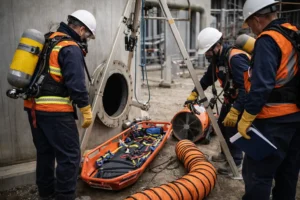
If you’ve ever wondered where the term “Whistleblower” originated, it refers to an individual who exposes fraud, abuse, or unsafe practices that threaten public health or workplace safety.
The term was popularized in the 1970s by American political activist Ralph Nader, who chose it as a positive alternative to “informer” or “spy.”
Today, whistleblowers are essential to a transparent and safe work culture. Under the Occupational Safety and Health Administration (OSHA), employees who report workplace violations are legally protected from retaliation, discrimination, or termination.
OSHA enforces these protections through its Whistleblower Protection Program, which oversees more than 20 federal laws designed to safeguard employees who speak up about violations in various sectors, from environmental and transportation to health care and financial regulation.
What Is the OSHA Whistleblower Protection Program?
The Federal OSHA Whistleblower Protection Program ensures that employees who engage in “protected activities” such as reporting safety violations, fraud, or illegal practices are shielded from employer retaliation.
Protected activities can include:
Reporting unsafe working conditions or hazards
Participating in an OSHA inspection
Testifying in an OSHA-related proceeding
Refusing to perform unsafe tasks that could cause serious injury or death
The program enforces 24 federal laws, each covering different industries and complaint timeframes.
Key Laws Under the OSHA Whistleblower Protection Program
Below are the most recognized laws under OSHA’s Whistleblower Protection authority. Each has a unique filing deadline for employees to report retaliation:
| Act / Law | Industry or Focus Area | Filing Period | Key Protection |
|---|---|---|---|
| Occupational Safety and Health Act (OSH Act) | Workplace safety and health | 30 days | Protects employees reporting safety violations from discrimination or discharge. |
| Asbestos Hazard Emergency Response Act (AHERA) | Environmental / Education | 90 days | Protects employees reporting asbestos hazards in schools. |
| Toxic Substances Control Act (TSCA) | Environmental / Chemical | 30 days | Prevents retaliation for reporting unsafe chemical practices. |
| Pipeline Safety Improvement Act (PSIA) | Energy / Pipeline | 180 days | Protects workers from exposing pipeline safety violations. |
| Surface Transportation Assistance Act (STAA) | Commercial motor carriers | 180 days | Safeguards truckers reporting unsafe vehicle operations. |
| Anti-Money Laundering Act (AMLA) | Financial institutions | 90 days | Protects whistleblowers exposing illegal financial activity. |
| Clean Air Act (CAA) | Environmental / Air quality | 30 days | Protects employees reporting violations of air pollution standards. |
| Comprehensive Environmental Response, Compensation, and Liability Act (CERCLA) | Hazardous waste cleanup | 30 days | Protects employees who report illegal waste dumping. |
| Consumer Financial Protection Act (CFPA) | Financial / Banking | 180 days | Protects employees reporting fraud or consumer rights violations. |
| Sarbanes-Oxley Act (SOX) | Corporate governance | 180 days | Protects workers reporting accounting fraud or misconduct. |
| Energy Reorganization Act (ERA) | Nuclear energy | 180 days | Protects nuclear workers reporting safety violations. |
| Federal Railroad Safety Act (FRSA) | Transportation / Rail | 180 days | Protects railroad employees who report hazards or injuries. |
| National Transit Systems Security Act (NTSSA) | Public transportation | 180 days | Protects transit workers who report security or safety issues. |
| Seaman’s Protection Act (SPA) | Maritime | 180 days | Protects seamen reporting violations of maritime safety laws. |
| Safe Drinking Water Act (SDWA) | Environmental / Public health | 30 days | Protects workers reporting unsafe water conditions. |
(Full list available at OSHA Whistleblower Protection Laws)
Why Whistleblower Protections Matter
Retaliation against whistleblowers undermines safety, transparency, and trust within the workplace.
OSHA defines retaliation as any adverse action taken against a worker for engaging in protected activity, including firing, demotion, denial of benefits, or harassment.
In 2023, OSHA’s Whistleblower Program received over 3,200 complaints, primarily in industries such as transportation, health care, and construction (OSHA Annual Report, 2024).
The agency investigates these complaints and can require reinstatement, back pay, or penalties for employers who violate whistleblower protections.
By ensuring these protections, OSHA encourages workers to speak out without fear, which directly improves workplace safety and compliance.
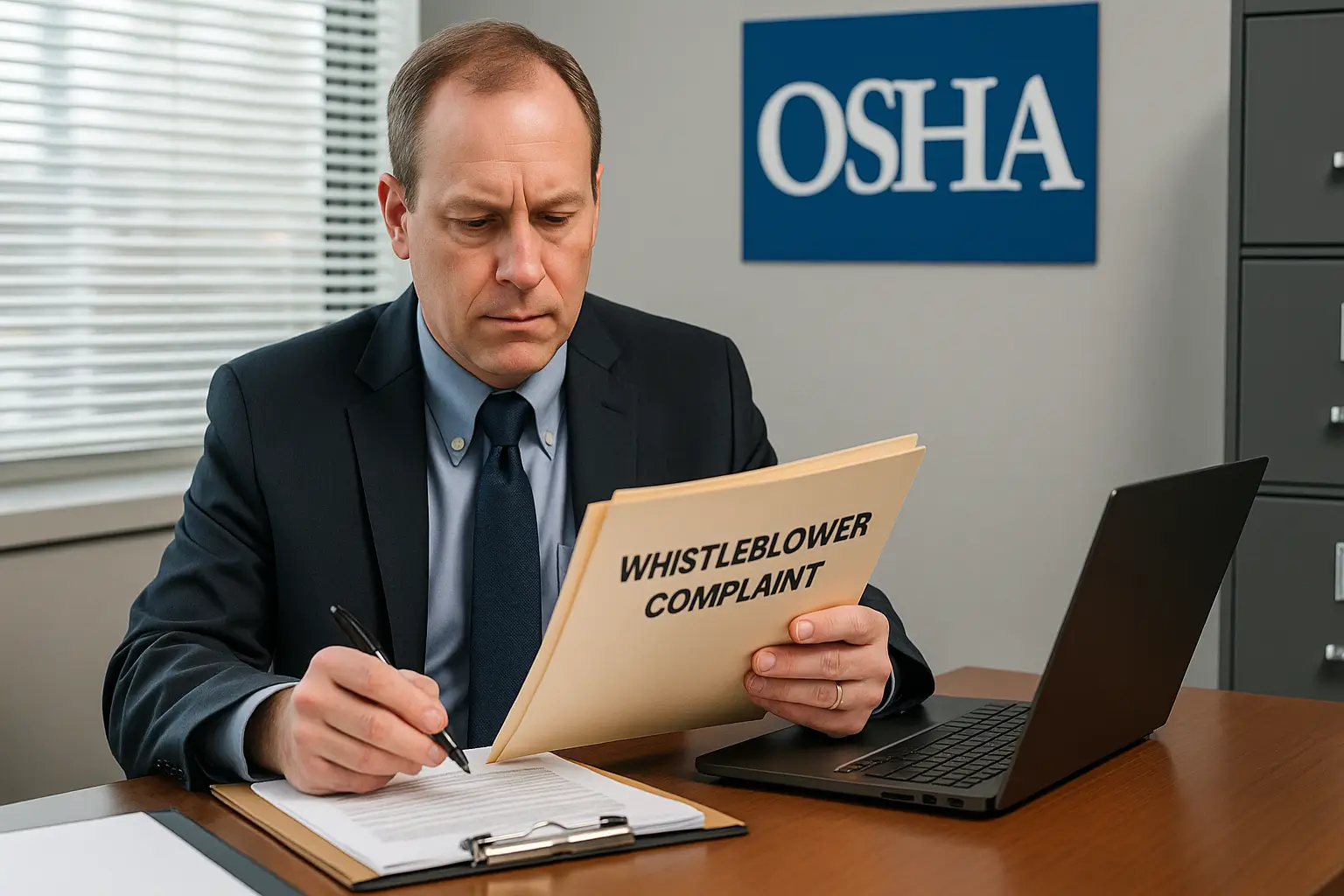
How to File a Whistleblower Complaint with OSHA
If an employee believes they have been retaliated against, they can file a whistleblower complaint:
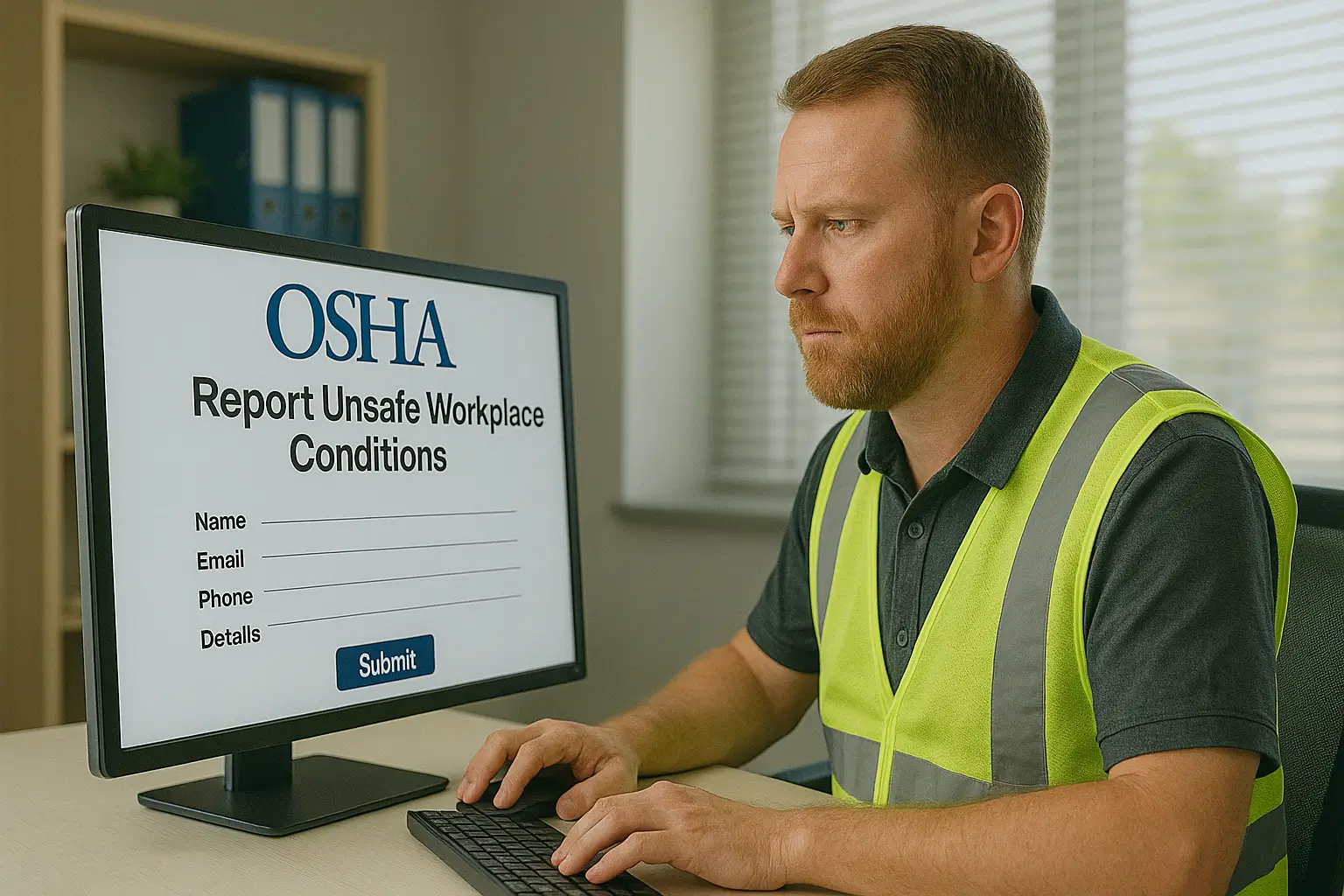
Online: www.osha.gov/whistleblower/WBPP
By mail, fax, or phone: File directly to the nearest OSHA regional office
In person: Visit a local OSHA Area Office
Important: Complaints must be filed within the timeframe specified under the relevant act (30 to 180 days).
OSHA reviews the complaint to determine jurisdiction and whether retaliation occurred. If the claim is substantiated, OSHA may order reinstatement, back wages, and other remedies.
Importance of OSHA Training for Compliance
Understanding your rights under whistleblower laws is crucial, but so is recognizing workplace hazards before they escalate.
OSHA-authorized training helps employees and employers build safer environments where whistleblowing becomes a last resort, not a necessity.
Recommended training programs:
OSHA 10-Hour General Industry Training – For entry-level workers to identify hazards and understand their rights.
OSHA 30-Hour General Industry Training – For supervisors and safety managers to implement OSHA standards effectively.
These courses reinforce workers’ ability to recognize unsafe conditions and their right to report them under OSHA’s protection.
Verified Statistics & Sources
OSHA Whistleblower Data (2023): OSHA Annual Whistleblower Report
OSHA Common Stats: OSHA Data & Statistics
NIOSH Worker Protection Studies (2023): CDC NIOSH Workplace Safety Research
Conclusion
Whistleblower protection is one of OSHA’s most powerful tools for creating safer workplaces. Employees must feel empowered to report unsafe or unethical practices without fear of retaliation.
By understanding these protections and reinforcing safety awareness through OSHA training, both employers and employees can cultivate a transparent, compliant, and hazard-free environment.