Tree trimming may look simple, but it’s one of the most dangerous outdoor jobs. Workers face risks like falling branches, power lines, chainsaws, unstable trees, and unexpected ground conditions, making injuries common when safety steps are ignored. This is where OSHA comes in. OSHA sets clear safety standards to guide both workers and employers on how to trim trees without putting anyone at risk.
In this blog, we’ll break down OSHA’s rules in easy terms, explain the biggest hazards, share required PPE, outline safe trimming techniques, and walk through the training and precautions every crew must follow to stay protected on the job.
OSHA Standards That Apply to Tree Trimming
Tree trimming falls under several OSHA regulations because of the wide range of hazards involved, such as chainsaws, falling limbs, climbing, and electrical exposure. OSHA does not treat tree work as a single category; instead, multiple standards apply depending on the task, location, and tools used. Understanding these regulations helps employers structure safer operations and ensures every worker knows exactly what is required to prevent injuries, fines, and accidents. Below is a breakdown of the most relevant OSHA standards and what they mean for tree-care operations. Read on!
Relevant OSHA Regulations
Here are some relevant OSHA regulations you must explore:
29 CFR 1910.266: Logging Operations
Covers chainsaw use, tree felling, and cutting activities. Even though tree care is not classified strictly as “logging,” OSHA applies sections of this standard to arborist work when similar hazards exist. It outlines requirements for chainsaw handling, work area safety, communication, and PPE.
29 CFR 1910 Subpart R: Special Industries
Includes additional safety rules for industries with elevated hazards. Certain aspects, such as safe material handling, machinery operation, and hazard control, are particularly important in tree-trimming environments, where workers handle heavy branches and operate specialized equipment.
29 CFR 1910.147: Lockout/Tagout (LOTO)
Applies when workers service or repair equipment like chippers, stump grinders, or aerial lifts. Machines must be properly shut down, isolated from energy sources, and locked out before maintenance to prevent accidental startup.
29 CFR 1910.269: Electric Power Generation, Transmission, and Distribution
This is one of the most critical regulations for tree workers. It applies to line-clearance tree trimming, any work performed within 10 feet of energized power lines. It includes rules for minimum approach distances, electrical hazard training, qualified personnel requirements, and insulated tools.
Employer Responsibilities Under OSHA
Learn about the employer responsibilities and policies under OSHA:
Conduct Thorough Hazard Assessments
Before any trimming begins, employers must evaluate all hazards, fall risks, electrical exposure, chainsaw use, dead trees, storm damage, terrain, and weather. OSHA requires documented hazard assessments, especially for jobs near power lines or elevated work platforms.
Provide Proper Training for All Workers
Employers must ensure workers receive training on equipment, fall prevention, chainsaw operation, emergency procedures, and electrical hazards. For line-clearance work, training must be specialized, and only “qualified” tree workers may perform the task.
Supply and Enforce the Use of PPE
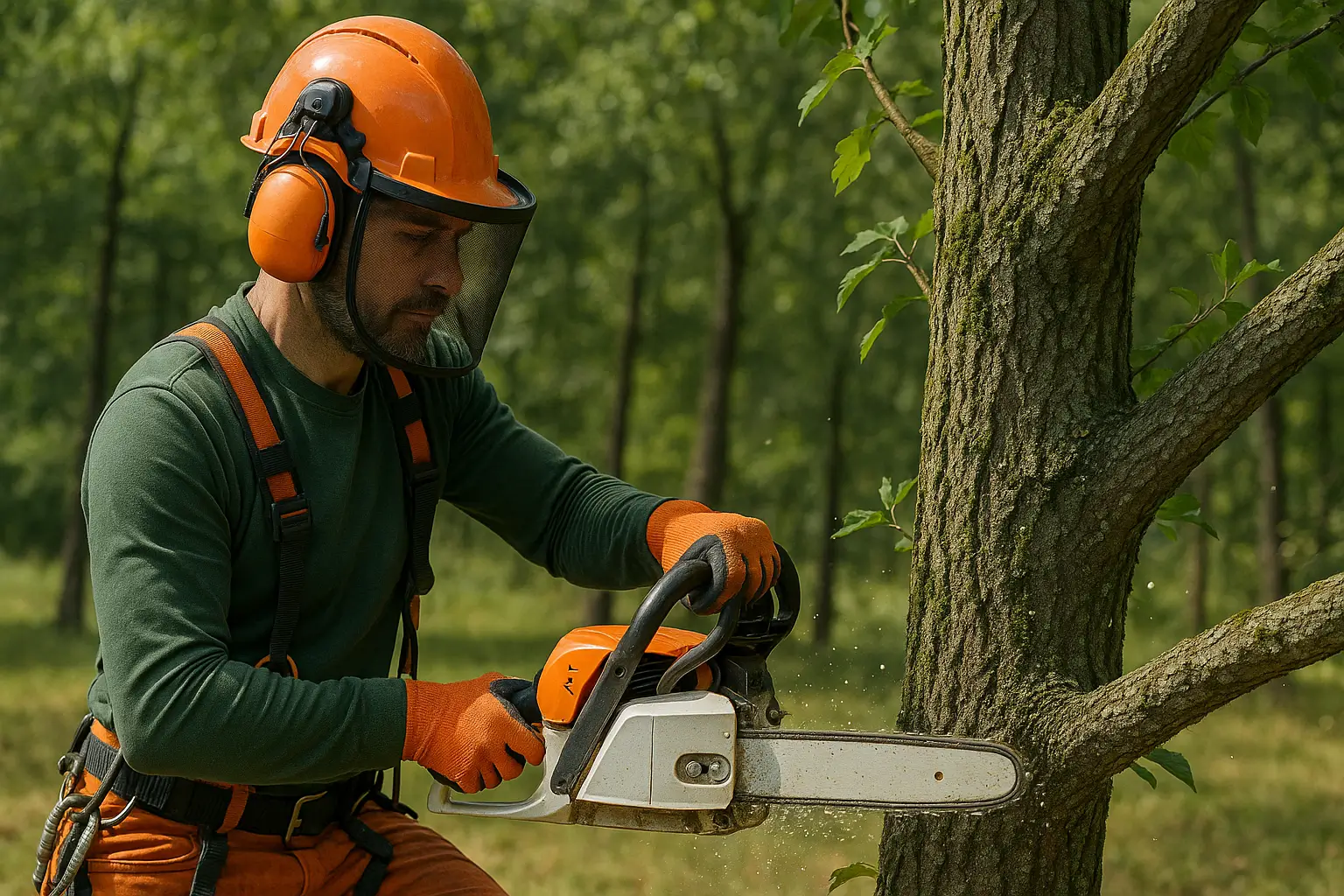
OSHA requires employers to provide the appropriate PPE that includes: Hard hats, Eye and face protection, Chainsaw-resistant leg protection, Hearing protection, High-visibility vests, Cut-resistant gloves, and Fall-arrest gear for aerial work.
Assign Qualified Personnel for High-Risk Tasks
Only trained and certified arborists, or qualified electrical workers, may perform tree trimming near energized lines, operate aerial lifts, or handle advanced rigging operations. Employers must ensure that no untrained worker is placed in a situation beyond their skill level.
Major Hazards in Tree Trimming
Tree trimming comes with several serious hazards that OSHA highlights for all arborists and workers. Falling branches can strike workers on the ground, causing severe injuries. Working at heights also puts workers at risk of falls, especially without proper harnesses or a stable footing. Electrocution is a major danger when trimming near overhead power lines.
Chainsaws and other power tools can cause deep cuts, kickbacks, and other injuries if mishandled. Improperly cutting or felling a tree can cause it to fall in an unexpected direction. Environmental factors like strong winds or unstable soil make the entire job even more unpredictable and risky.
OSHA-Compliant Pre-Work Safety Procedures
Before any tree-trimming job begins, OSHA requires workers to follow strict pre-work safety steps. These procedures help crews spot dangers early, plan the job correctly, and reduce the chances of accidents. A proper assessment and briefing ensure everyone knows their role, the risks, and how to stay safe throughout the operation.
Site Assessment Checklist
A site assessment is the first step in OSHA-compliant tree-care work. Workers must identify all hazards, such as dead or weak branches, tree lean, and nearby buildings or vehicles. Electrical hazards must be checked, especially when trees are close to power lines. Weather conditions like wind or rain should be reviewed before starting the job. Finally, teams must confirm access paths and escape routes for safe movement and emergencies.
Job Briefing Requirements
OSHA requires a job briefing before each tree-trimming task begins. This briefing covers the specific tasks involved, the hazards workers should expect, and the PPE needed to stay protected. The team also reviews how tools will be used safely and who is responsible for what. Emergency procedures, such as response steps for falls, electrical contact, or injuries, must also be clearly explained so everyone is prepared.
OSHA Best Practices For Safe Cutting Techniques
OSHA encourages specific cutting methods that reduce the risk of kickbacks, falling limbs, and loss of control during tree-trimming work. These techniques help workers stay stable, protect nearby structures, and prevent sudden chain saw reactions. Using proper cutting practices also ensures a cleaner, safer removal process.
Three-Cut Method for Limb Removal
The three-cut method prevents bark tearing and sudden branch drops. Workers start with an undercut to stop the limb from splitting, followed by a top cut to release most of the weight. The final cut removes the remaining stub safely without damaging the trunk or causing kickback.
Directional Felling
Directional felling focuses on controlling where the tree falls. Workers assess the tree’s natural lean, weight balance, and surrounding structures before cutting. A clear retreat path must be prepared so the crew can move away quickly once the tree begins to fall.
Avoiding Kickback Zones
To avoid kickback, OSHA recommends keeping the saw’s bar away from the upper tip area, where sudden reactions occur. Workers should maintain a firm stance and grip to stay stable during cutting. Proper bar positioning helps prevent loss of control and reduces injury risks.
Conclusion
Trimming trees safely requires more than basic cutting skills; it demands awareness, preparation, and strict adherence to OSHA standards. By understanding major hazards, following pre-work procedures, and using proven cutting techniques, workers can significantly reduce risks on the job. Whether you’re a professional arborist or part of a maintenance crew, prioritizing safety ensures every task is completed efficiently and without injury. Start applying these OSHA-aligned practices today to keep yourself and your team protected.