December is one of the busiest months of the year, with holiday celebrations, year-end deadlines, and colder weather increasing potential workplace and community risks.
Safety discussions during this time are crucial to help employees stay aware, prepared, and protected.
OSHA-relevant safety measures are especially important, ensuring that workplaces remain compliant while employees are empowered to make safe choices.
In this blog, you can find three key topics: preventing drunk driving during the holiday season, addressing common holiday hazards in and around the workplace, and tips for staying safe during winter weather.
By focusing on these areas, organizations and workers alike can reduce accidents, protect health, and foster a safer environment for all. So, read on!
Holiday Season Drunk Driving Campaign
December brings celebrations, office parties, and festive gatherings, but it also marks one of the highest-risk periods for alcohol-related accidents.
National data consistently shows a spike in DUI incidents during the holiday season, putting both workers and communities at greater risk.
This makes it essential for workplaces to address drunk driving as a core December safety topic.
Employer Role in Promoting Safe Choices
Employers play an important part in educating staff about responsible commuting during the holiday season. Sharing reminders about safe transportation options helps reinforce a culture of safety beyond the workplace.
From an OSHA perspective, organizations benefit when employees are protected both on and off the clock, as commuting safety indirectly contributes to overall workplace well-being.
Practical Tips for Safe Commuting
Companies can encourage simple, effective strategies to prevent alcohol-related incidents.
These include promoting ride-sharing apps, recommending public transportation, arranging carpools, or ensuring each event has a designated driver.
Planning transportation before holiday events helps employees avoid risky situations and make safer choices without last-minute stress.
Linking Awareness to Workplace Safety & Liability
Raising awareness about drunk driving doesn’t just safeguard employees; it also reduces workplace accidents, absenteeism, and liability risks.
When workers arrive safely and maintain good health, productivity remains steady.
A proactive safety culture benefits everyone, strengthening both employee trust and employer responsibility during the busy December season.
Holiday Safety Topics To Follow
During the holiday season, workplaces often introduce decorations, lights, and additional electrical setups that can create new hazards.
Overloaded circuits, poorly placed décor, and blocked exits increase the risk of fire and accidents.
Employers should ensure that all decorations meet safety standards and that pathways remain clear.
Regular inspections during this period help identify potential risks early. Raising awareness about these seasonal hazards keeps the workplace safer for everyone.
Safe handling of equipment, ladders, and seasonal installations
Setting up holiday décor often requires the use of ladders, tools, and electrical equipment, which can lead to injuries if used improperly.
Employees should be reminded to follow ladder safety rules, maintain three contact points, avoid overreaching, and ensure stable placement.
Supervisors should ensure only trained individuals handle electrical connections and installations.
Clear guidelines and quick toolbox refreshers can prevent unnecessary accidents. Safe practices help maintain a festive environment without compromising well-being.
Conducting toolbox talks or safety reminders before holiday events
Before any workplace celebration or event, conducting a short toolbox talk helps bring safety back into focus.
These quick sessions can cover topics such as fire safety, emergency exits, safe electrical use, and responsible behavior during gatherings.
They prepare employees for potential risks and reinforce that safety remains a priority, even during festivities. A brief reminder can significantly reduce incidents. Consistent communication helps maintain a culture of awareness.
Reinforcing emergency procedures and first aid readiness
The holiday season is a good time to revisit emergency response plans and ensure employees know evacuation routes and contact points.
First aid kits should be checked, stocked, and accessible, with trained responders on each shift.
Employers should also verify that fire extinguishers and alarms are functional. Reinforcing these procedures builds confidence and preparedness among staff.
Being proactive ensures that if an emergency arises, the team can respond quickly and effectively.
A Must-Follow Guide About Winter Safety
Winter brings increased exposure risks, especially for outdoor workers who may face frostbite, hypothermia, and reduced mobility.
Even indoor staff can experience hazards when walking across icy parking lots or wet entry areas.
Employers should remind teams about proper layering, staying dry, and recognizing early symptoms of cold stress.
Ensuring pathways are clear and well-lit reduces slip-and-fall incidents. Awareness and preparation can significantly lower seasonal injury rates.
PPE, heating equipment, and vehicle preparation
Work environments should be equipped with winter-appropriate PPE such as insulated gloves, thermal layers, and slip-resistant shoes.
Heating equipment must be inspected regularly to prevent malfunctions, carbon monoxide risks, or fire hazards.
For employees who drive for work, vehicles should be checked for tires, battery condition, and emergency kits.
Supervisors should set protocols for reduced-visibility or extreme-cold conditions. These precautions help maintain safe and productive operations throughout winter.
Snow and ice removal procedures and slip-resistant footwear
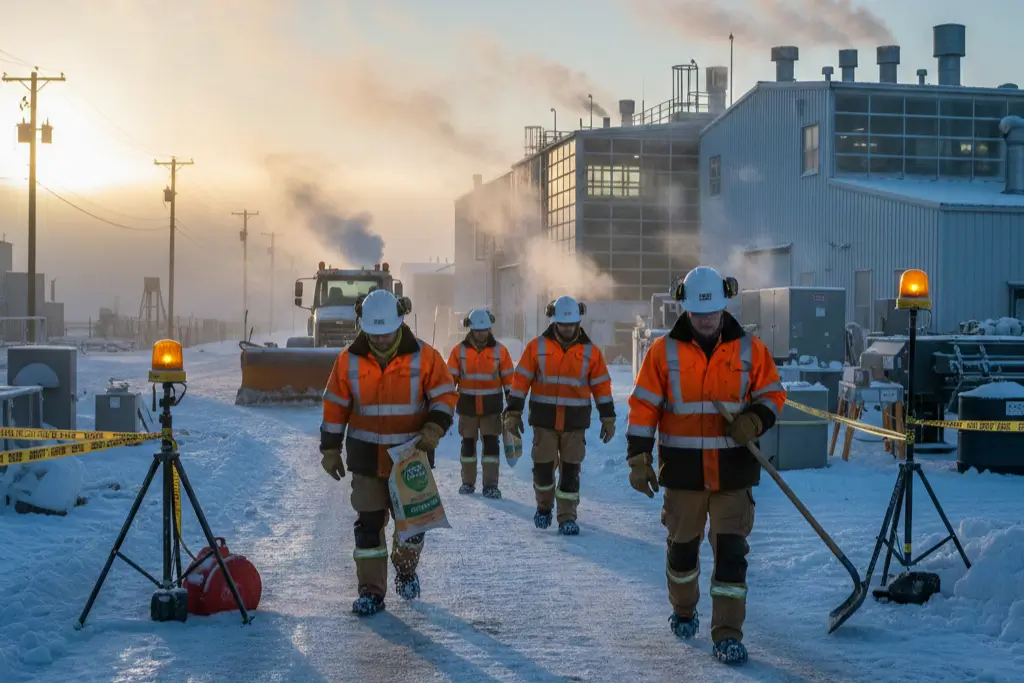
Clear and timely snow and ice removal is essential for preventing workplace injuries. Employers should assign responsibility for shoveling, salting, and regularly monitoring high-traffic areas.
Slip-resistant footwear should be encouraged or provided to reduce falls on icy surfaces. Entry mats and designated drying areas can also help manage moisture indoors.
Consistent implementation of these measures keeps both employees and visitors safe.
Reviewing emergency plans for extreme weather events
Extreme weather events like storms, heavy snowfall, or power outages require updated and well-communicated emergency plans.
Employers should review procedures with staff, including shelter-in-place instructions, communication protocols, and business continuity measures.
Emergency supplies, flashlights, blankets, and backup power should be checked and replenished.
Leaders must ensure all employees know who to contact and what to do during sudden weather changes. Preparation ensures safety and minimizes operational disruptions.
Wrap Up
Winter brings unique safety challenges that require awareness, preparation, and proactive measures.
By addressing cold weather risks, ensuring proper PPE and heating safety, maintaining clear walkways, and reviewing emergency plans, workplaces can significantly reduce accidents and protect employees.
Combining these precautions with ongoing training and safety reminders fosters a culture of vigilance, keeping teams safe and operations running smoothly throughout the winter season.
Employers and workers alike benefit when safety remains a top priority during the colder months.
December Safety Awareness Guide
December is one of the busiest months of the year, with holiday celebrations, year-end deadlines, and colder weather increasing potential workplace and community risks. Safety discussions during this time are crucial to help employees stay aware, prepared, and protected. OSHA-relevant safety measures are especially important, ensuring that workplaces remain compliant while employees are empowered to make safe choices.
In this blog, you can find three key topics: preventing drunk driving during the holiday season, addressing common holiday hazards in and around the workplace, and tips for staying safe during winter weather. By focusing on these areas, organizations and workers alike can reduce accidents, protect health, and foster a safer environment for all. So, read on!
Holiday Season Drunk Driving Campaign
December brings celebrations, office parties, and festive gatherings, but it also marks one of the highest-risk periods for alcohol-related accidents. National data consistently shows a spike in DUI incidents during the holiday season, putting both workers and communities at greater risk. This makes it essential for workplaces to address drunk driving as a core December safety topic.
Employer Role in Promoting Safe Choices
Employers play an important part in educating staff about responsible commuting during the holiday season. Sharing reminders about safe transportation options helps reinforce a culture of safety beyond the workplace. From an OSHA perspective, organizations benefit when employees are protected both on and off the clock, as commuting safety indirectly contributes to overall workplace well-being.
Practical Tips for Safe Commuting
Companies can encourage simple, effective strategies to prevent alcohol-related incidents. These include promoting ride-sharing apps, recommending public transportation, arranging carpools, or ensuring each event has a designated driver. Planning transportation before holiday events helps employees avoid risky situations and make safer choices without last-minute stress.
Linking Awareness to Workplace Safety & Liability
Raising awareness about drunk driving doesn’t just safeguard employees—it also reduces workplace accidents, absenteeism, and liability risks. When workers arrive safely and maintain good health, productivity remains steady. A proactive safety culture benefits everyone, strengthening both employee trust and employer responsibility during the busy December season.
Holiday Safety Topics To Follow
During the holiday season, workplaces often introduce decorations, lights, and additional electrical setups that can create new hazards. Overloaded circuits, poorly placed décor, and blocked exits increase the risk of fire and accidents. Employers should ensure that all decorations meet safety standards and that pathways remain clear. Regular inspections during this period help identify potential risks early. Raising awareness about these seasonal hazards keeps the workplace safer for everyone.
Safe handling of equipment, ladders, and seasonal installations
Setting up holiday décor often requires the use of ladders, tools, and electrical equipment, which can lead to injuries if used improperly. Employees should be reminded to follow ladder safety rules, maintain three contact points, avoid overreaching, and ensure stable placement. Supervisors should ensure only trained individuals handle electrical connections and installations. Clear guidelines and quick toolbox refreshers can prevent unnecessary accidents. Safe practices help maintain a festive environment without compromising well-being.
Conducting toolbox talks or safety reminders before holiday events
Before any workplace celebration or event, conducting a short toolbox talk helps bring safety back into focus. These quick sessions can cover topics such as fire safety, emergency exits, safe electrical use, and responsible behavior during gatherings. They prepare employees for potential risks and reinforce that safety remains a priority, even during festivities. A brief reminder can significantly reduce incidents. Consistent communication helps maintain a culture of awareness.
Reinforcing emergency procedures and first aid readiness
The holiday season is a good time to revisit emergency response plans and ensure employees know evacuation routes and contact points. First aid kits should be checked, stocked, and accessible, with trained responders on each shift. Employers should also verify that fire extinguishers and alarms are functional. Reinforcing these procedures builds confidence and preparedness among staff. Being proactive ensures that if an emergency arises, the team can respond quickly and effectively.
A Must-Follow Guide About Winter Safety
Winter brings increased exposure risks, especially for outdoor workers who may face frostbite, hypothermia, and reduced mobility. Even indoor staff can experience hazards when walking across icy parking lots or wet entry areas. Employers should remind teams about proper layering, staying dry, and recognizing early symptoms of cold stress. Ensuring pathways are clear and well-lit reduces slip-and-fall incidents. Awareness and preparation can significantly lower seasonal injury rates.
PPE, heating equipment, and vehicle preparation
Work environments should be equipped with winter-appropriate PPE such as insulated gloves, thermal layers, and slip-resistant shoes. Heating equipment must be inspected regularly to prevent malfunctions, carbon monoxide risks, or fire hazards. For employees who drive for work, vehicles should be checked for tires, battery condition, and emergency kits. Supervisors should set protocols for reduced-visibility or extreme-cold conditions. These precautions help maintain safe and productive operations throughout winter.
Snow and ice removal procedures and slip-resistant footwear
Clear and timely snow and ice removal is essential for preventing workplace injuries. Employers should assign responsibility for shoveling, salting, and regularly monitoring high-traffic areas. Slip-resistant footwear should be encouraged or provided to reduce falls on icy surfaces. Entry mats and designated drying areas can also help manage moisture indoors. Consistent implementation of these measures keeps both employees and visitors safe.
Reviewing emergency plans for extreme weather events
Extreme weather events like storms, heavy snowfall, or power outages require updated and well-communicated emergency plans. Employers should review procedures with staff, including shelter-in-place instructions, communication protocols, and business continuity measures. Emergency supplies, flashlights, blankets, and backup power should be checked and replenished. Leaders must ensure all employees know who to contact and what to do during sudden weather changes. Preparation ensures safety and minimizes operational disruptions.
Wrap Up
Winter brings unique safety challenges that require awareness, preparation, and proactive measures. By addressing cold weather risks, ensuring proper PPE and heating safety, maintaining clear walkways, and reviewing emergency plans, workplaces can significantly reduce accidents and protect employees. Combining these precautions with ongoing training and safety reminders fosters a culture of vigilance, keeping teams safe and operations running smoothly throughout the winter season. Employers and workers alike benefit when safety remains a top priority during the colder months.