Supervisors and site managers set the tone for safe, efficient construction work. A strong safety program protects workers, avoids costly incidents, and strengthens your company’s reputation.
It also keeps you aligned with Federal OSHA requirements, reducing inspection risk, penalties, and downtime while improving productivity and morale.
Below are practical, field-ready rules and tips you can apply immediately to any construction project.
1) Provide the Right Safety Training (Role-Based)
OSHA recommends role-appropriate training through Outreach courses:
OSHA 10-Hour Construction: For entry-level workers, hazard awareness, PPE basics, and common site risks.
OSHA 30-Hour Construction: For leads/supervisors programs, hazard controls, responsibilities, incident response.
Why it matters: Trained teams recognize hazards earlier, choose safer methods, and document compliance correctly.
2) Invest in Quality PPE (and Enforce It)
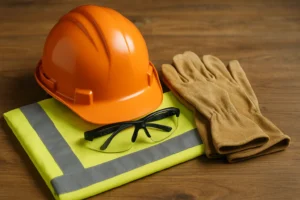
Treat PPE as the first barrier against the most common risks. At minimum:
Head/eye/face: Hard hats, safety glasses/goggles, face shields for cutting or grinding
Hands/feet: Cut-resistant gloves, job-appropriate footwear (toe protection, slip resistance)
Respiratory/hearing: Job-specific respirators and hearing protection
Body/visibility: High-vis garments, appropriate clothing for weather and task
Pro tip: Make PPE selection part of your documented hazard assessment, then train on correct use, care, and replacement.
3) Inspect Equipment on a Schedule (and Document It)
Routine inspections keep safety top-of-mind and catch defects early. Build simple checklists for:
Ladders, scaffolds, and lifts (guardrails, planks, pins, access)
Power tools and cords (GFCI use, no nicks/cracks, correct guards)
Heavy equipment (brakes, tires/tracks, alarms, hydraulics)
PPE (fit, damage, cleanliness)
Log results and correct issues fast your records matter during audits and investigations.
4) Keep the Site Clean (Housekeeping = Hazard Control)
Good housekeeping prevents slips, trips, falls, and equipment damage.
Clear walkways and stairs; coil cords/hoses
Remove debris promptly; provide labeled waste/recycling bins
Store materials stable and below edge heights; secure gas cylinders
Mark wet surfaces; use spill kits near fueling or chemical storage
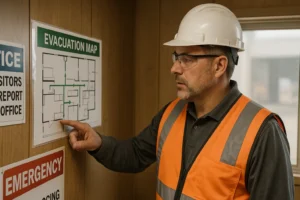
5) Draft and Drill an Emergency Response Plan
Emergencies happen even on well-run sites. Your EAP should define:
Alarm/notification and who calls emergency services
Evacuation routes, rally points, and headcounts
Role assignments (first-aid responders, shut-down steps)
Severe weather, fire, chemical release, medical events
Run short tabletop exercises and toolbox talks so everyone knows their role.
6) Material Handling: Lift Smart, Move Smart
Most back and hand injuries are preventable:
Use mechanical aids (dollies, hoists, forklifts) whenever possible
Team-lift heavy/awkward loads; keep loads close to the body
Plan the path (no trip hazards); wear proper gloves/boots
Train operators and riggers no shortcuts with slings or pick points
7) Test Tools and Follow Manufacturer Guidance
Before each use:
Verify guards, dead-man switches, bits/blades, and GFCI
Match the tool and accessory to the task/material/rpm
Review the manual for limits and maintenance intervals
Tag out defective tools immediately
8) Use the Right Tool for the Job (Every Time)
Improvised methods and mismatched tools cause injuries and damage.
Choose task-rated tools and accessories (e.g., masonry vs. wood blades)
Use the correct ladder height/type and lift for access
Never bypass guards/interlocks to “make it fit” or “speed it up”
Conclusion
Consistent training, PPE, inspections, housekeeping, and prepared emergency response are the core of construction safety done right.
The payoff is huge: fewer injuries, less downtime, lower costs and a safer, prouder team.
Give your crew the confidence and knowledge to work safely and productively.