Confined space incidents remain one of the most dangerous workplace emergencies, with rescue operations often posing greater risks than the original task. In many cases, unplanned or poorly executed confined space rescue attempts lead to multiple injuries or fatalities. However, workplaces evolve in 2026, and confined space rescue will become more structured, technology-driven, and prevention-focused. Regulatory expectations, improved training, and advanced equipment now play a central role in saving lives. This blog explains how confined space rescue works today, what regulations require, and why proper planning is critical. So, read on!
What Is Confined Space Rescue?
Confined space rescue refers to the process of safely retrieving a worker who becomes incapacitated or trapped inside a confined or permit-required confined space. These spaces, such as tanks, silos, vaults, and sewers, often have limited entry points and may contain hazardous atmospheres. Rescue operations must account for risks like oxygen deficiency, toxic gases, engulfment, and restricted movement. Because of these dangers, confined space rescue requires specialized training, equipment, and a pre-planned response and rescue equipment. In 2026, the focus is on controlled, non-entry rescue whenever possible to minimize risk to both the victim and rescuers.
OSHA’s Role and Regulatory Requirements
OSHA plays a critical role in ensuring the safety of workers in confined spaces through its Permit-Required Confined Space (PRCS) standard (29 CFR 1910.146). This standard sets strict requirements for employers to identify and control hazards in spaces with limited entry, potential for toxic or oxygen-deficient atmospheres, or other serious risks. One of the key responsibilities under this standard is that employers must develop a written rescue plan before any worker enters a permit-required confined space, ensuring that rescue procedures are fully prepared in advance. OSHA also mandates that rescue teams must be trained and ready to respond immediately to emergencies, with clear communication protocols, proper equipment, and defined roles. This ensures that both entrants and rescuers are protected, reducing the likelihood of injury or fatalities during incidents.
Types of Confined Space Rescue
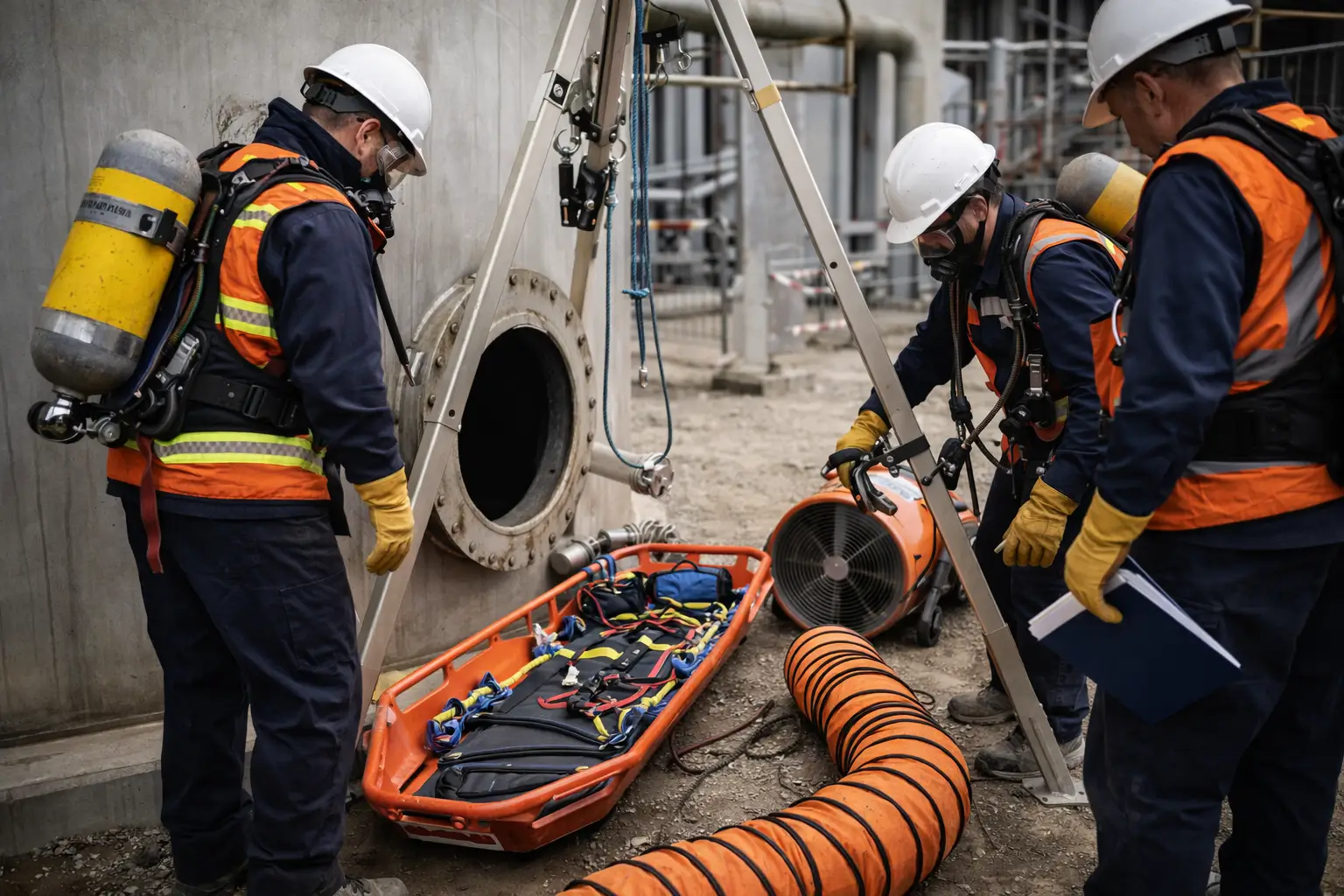
Confined space rescue plans are typically categorized into non-entry (external) rescue and entry rescue, depending on the severity of the incident and the available resources. Non-entry rescue involves using retrieval systems, such as harnesses, tripods, and winches, to pull the worker out without anyone physically entering the space. This method is preferred whenever possible because it eliminates additional risk to rescuers.
Entry rescue, on the other hand, requires trained personnel to enter the confined space with full protective gear, including respiratory protection, to directly assist or extract the worker. Entry rescues are reserved for situations where non-entry methods are not feasible, such as when the worker is incapacitated and cannot be safely retrieved externally. Both methods require meticulous planning, proper equipment, and ongoing training to ensure the safety of all involved.
Confined Space Rescue Team Structure in 2026
A well-organized rescue team is the backbone of any effective confined space operation, and in 2026, team structure emphasizes clarity, coordination, and advanced training. Typically, the team is composed of four essential roles: the entrant, who is the worker entering the confined space; the attendant, who remains outside to monitor the entrant and maintain communication; the entry supervisor, responsible for overseeing the operation, verifying permits, and ensuring all safety protocols are followed; and the rescue personnel, trained to perform emergency retrievals when incidents occur.
Moreover, each member of the rescue team must meet specific qualifications set by OSHA, including formal confined space training, knowledge of hazards, and practical skills in using rescue equipment such as tripods, winches, and respiratory devices. In addition, ongoing training and refresher drills are mandatory to ensure the team can respond quickly and efficiently under high-stress conditions.
The Step-by-Step Confined Space Rescue Process
Confined space rescue requires a systematic, step-by-step approach to ensure the safety of both the entrant and the rescue team. Each phase must be carefully executed to minimize risks and maximize efficiency during emergencies. Here’s a detailed breakdown of the process:
-
Hazard Assessment and Scene Evaluation
Before any rescue attempt, the team must quickly assess the scene to identify existing and potential hazards, such as toxic gases, flammable substances, electrical equipment, or structural instability. This evaluation helps determine the safest approach and whether non-entry or entry rescue is appropriate.
-
Atmospheric Testing and Ventilation
Confined spaces often contain oxygen-deficient or contaminated air. The rescue team uses gas detectors to check oxygen levels, flammable gases, and toxic substances. If hazards are detected, ventilation systems such as fans or air movers are deployed to improve air quality and reduce risk to both the victim and rescuers.
-
Use of Retrieval Systems and Rescue Equipment
Depending on the situation, rescuers may deploy non-entry retrieval systems like tripods, harnesses, and winches to pull the worker out safely. In cases where entry rescue is necessary, the team uses full PPE, harnesses, lifelines, and respiratory protection to safely enter and extract the victim while maintaining communication with the attendant and supervisor outside.
-
Medical Response and Victim Stabilization
Once the worker is removed from the confined space, immediate medical attention is critical. The team should assess the victim for frostbite, asphyxiation, trauma, or other injuries, administer first aid if trained, and ensure that emergency medical services (EMS) are contacted promptly. Stabilizing the victim before transport helps prevent further injury or complications.
Modern Equipment and Technology Used in 2026
Confined space rescue in 2026 relies heavily on advanced technology to improve safety and efficiency. Gas detectors and continuous monitoring systems allow teams to detect oxygen deficiency, flammable gases, or toxic atmospheres in real time, reducing the risk of surprises during rescue operations.
Moreover, tripods, winches, and mechanical advantage systems provide secure and controlled entry and retrieval, minimizing physical strain on rescuers. Modern rescues also use wearable sensors, body cams, and real-time communication tools, enabling supervisors to monitor conditions and coordinate actions remotely. Additionally, improved PPE and respiratory protection offer better durability, comfort, and protection against extreme environments, making rescues safer for all personnel involved.
Common Confined Space Rescue Challenges
Confined space rescues are inherently high-risk due to several persistent challenges. Toxic or oxygen-deficient atmospheres can incapacitate both entrants and rescuers if not detected and mitigated promptly. Many spaces have limited access and visibility, which complicates movement, equipment setup, and victim retrieval.
There is also a significant risk of secondary injuries, as rescuers entering without proper preparation can become additional victims. Finally, time pressure and medical emergencies demand rapid yet precise action, requiring teams to balance speed with safety to prevent worsening the situation. Understanding these challenges is crucial for effective planning and training.
Training and Preparedness Requirements
Effective confined space rescue depends on regular training and preparedness to ensure teams can respond safely and efficiently. OSHA recommends frequent rescue drills and simulations that replicate real-life emergencies, allowing rescuers to practice techniques, communication, and use of equipment.
Employers must also verify rescue capability, ensuring that all personnel are competent, familiar with procedures, and able to respond within OSHA-required timeframes. Refresher training and scenario-based practice are essential to maintain skills, update teams on new equipment or protocols, and reinforce the ability to handle unique hazards or complex confined spaces.
Conclusion
Confined space rescue in 2026 relies on a combination of strategic planning, specialized training, and modern technology to protect workers in some of the most hazardous work environments. Understanding OSHA’s requirements, clearly defining team roles, and maintaining readiness through drills and proper equipment are essential to prevent accidents and save lives. As workplace risks evolve, rescue planning must adapt accordingly. Employers should invest in comprehensive training, state-of-the-art rescue equipment, and strict compliance practices to ensure that every confined space operation is conducted safely and efficiently.